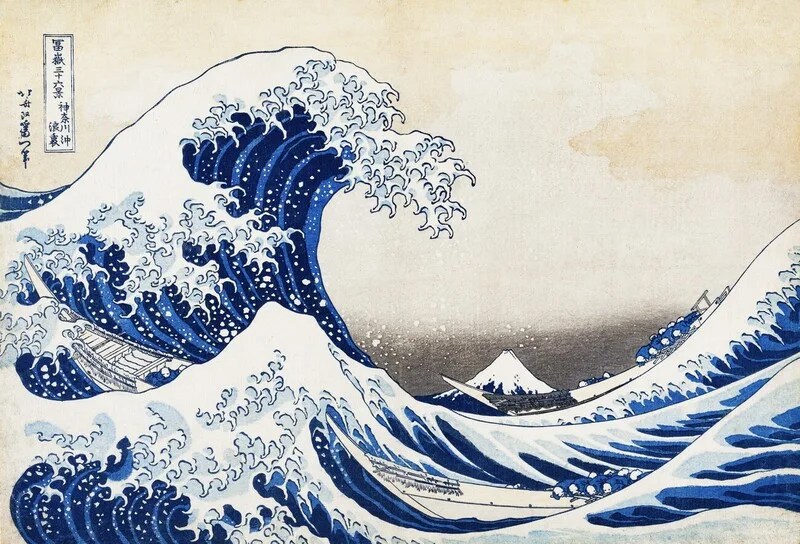
Grey walls of water towered above us. The waves, according to a low, defiant growl from the captain, were forty-five high. I couldn’t tell. Looking up at their peaks, their churning bulk suppurated menace. White-flecked ribbons trailed their vast, turbine contortions.
It was unclear whether we were moving towards them or they towards us. We veered giddily and unsteadily up their steely slopes, yawing from side to side until either tipping through or over the summits, falling an immediate ten or fifteen feet. Each time there would be a sickening thud. Great duvets of spray would erupt around and over the foredeck, sometimes high over the boat. Inside the chaos of the wheelhouse, maps, odd deck shoes and a soaked John Irving novel bellyflopped drunkenly across the floor.
The boat continued its slide down into grim valleys, boiling gaps between the waves. The same cycle would begin again on juddering repeat. Two exterior windscreen wipers scraped feebly, their actions a chamber conductor’s baton up against a thousand death metal bands. Water powered down the glass in mocking cascades. Our vision blurred. The wind strength was beyond ridiculous. My stomach churned.
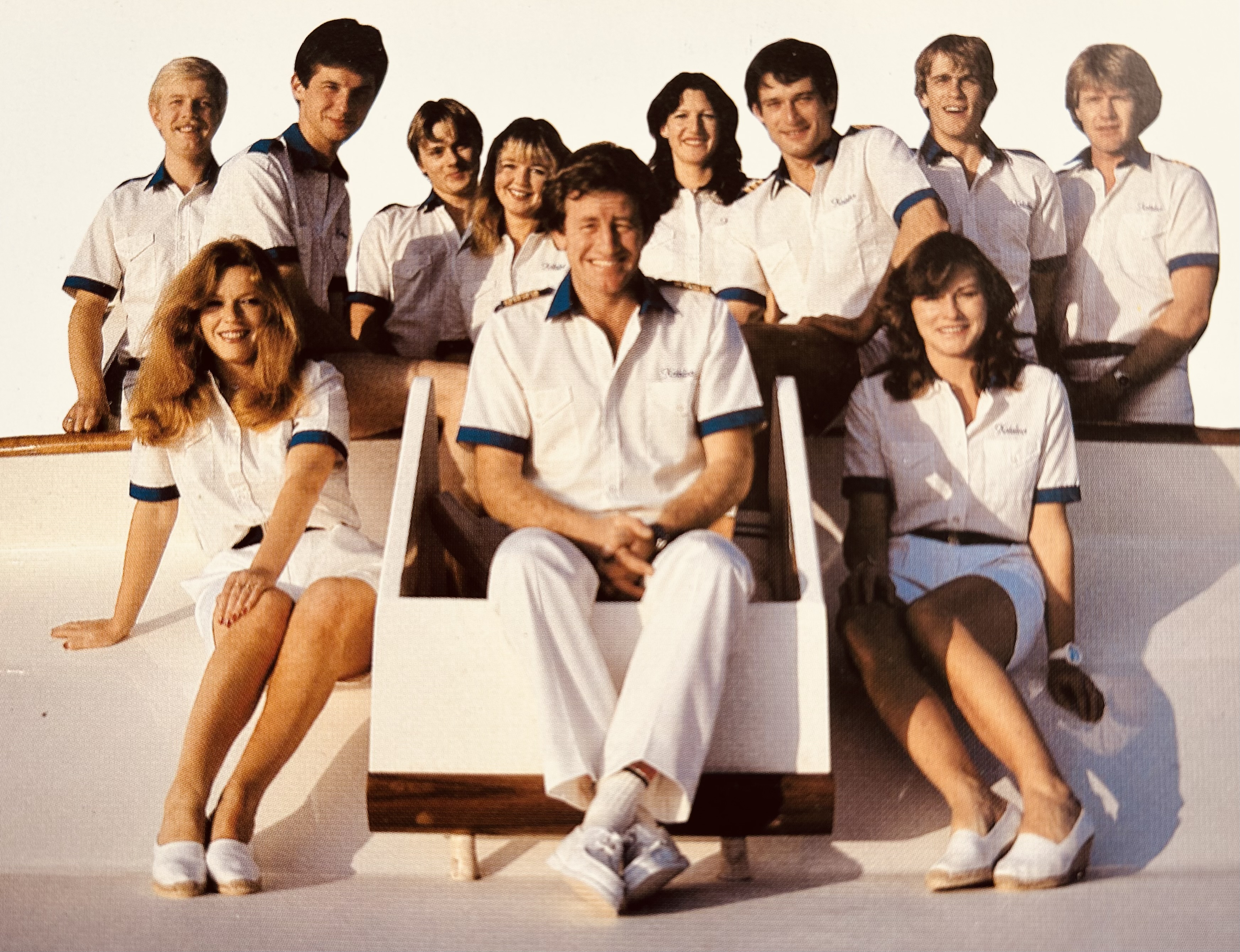
A twenty-five-million-pound motor yacht, the boat had been launched the previous October. Our crew at that point on the five-hundred-ton, one-hundred-and-forty-eight-foot vessel was eight men and four women. We huddled on the bridge, the most stable point on the vessel. Those not straining their eyes through the windows were clinging to the fittings that backed the wheelhouse. Anyone momentarily absent was being sick. Attempting to descend the stairwell to our crew quarters in the bow was to fall prey to the erratic jerks of a giant cocktail shaker, one that hurled you at the walls or launched you into space with casual violence. Any seconds of stillness were horribly brief.
“Team,” barked our Captain, with matter-of-fact finality, “I think we all might make a phone call. Parents. People that matter.”
We looked at him. He raised his voice above the incessant roar.
“Just to, er, just to let them…. Just to speak to them,” he finished abruptly, turning his troubled blue eyes forwards again. We’d heard him describing the corkscrew twists and turns of the flight decks on HMS Ark Royal in rough seas many times. His British navy posting on the aircraft carrier had seen him near the top of the command chain. His brevity now transmitted extreme worry.
One by one, we passed the brick-sized handset around, a staggeringly modern instrument in 1983. When it came to my turn, I interrupted a Little Downham Sunday lunch back in Home Counties Buckinghamshire. My mother answered. Dry mouthed, I rambled.
“Oh, Ma, sorry to drag you from the table. I was just calling … I simply wanted to let you know we’re not far from docking in Antibes. I should be home within about a week. And I, er…. Well, much love to you and Pa and again sorry to crash into your lunch.”
She sounded pleased to hear me, thanked me for the call, explained who of the family was back at the table and, knowing that the satellite line would be stupidly costly, rang off promptly when I mumbled goodbye.
I handed on the receiver awkwardly and fell back to waiting. The storm had reached its crescendo. We’d been in it for around ten hours. It felt like years. I didn’t vomit but wanted to. All of us were too petrified to take photographs.
* * * * * * * * * * * * * * * * * * * * * * * * * * * * * * * * * * *
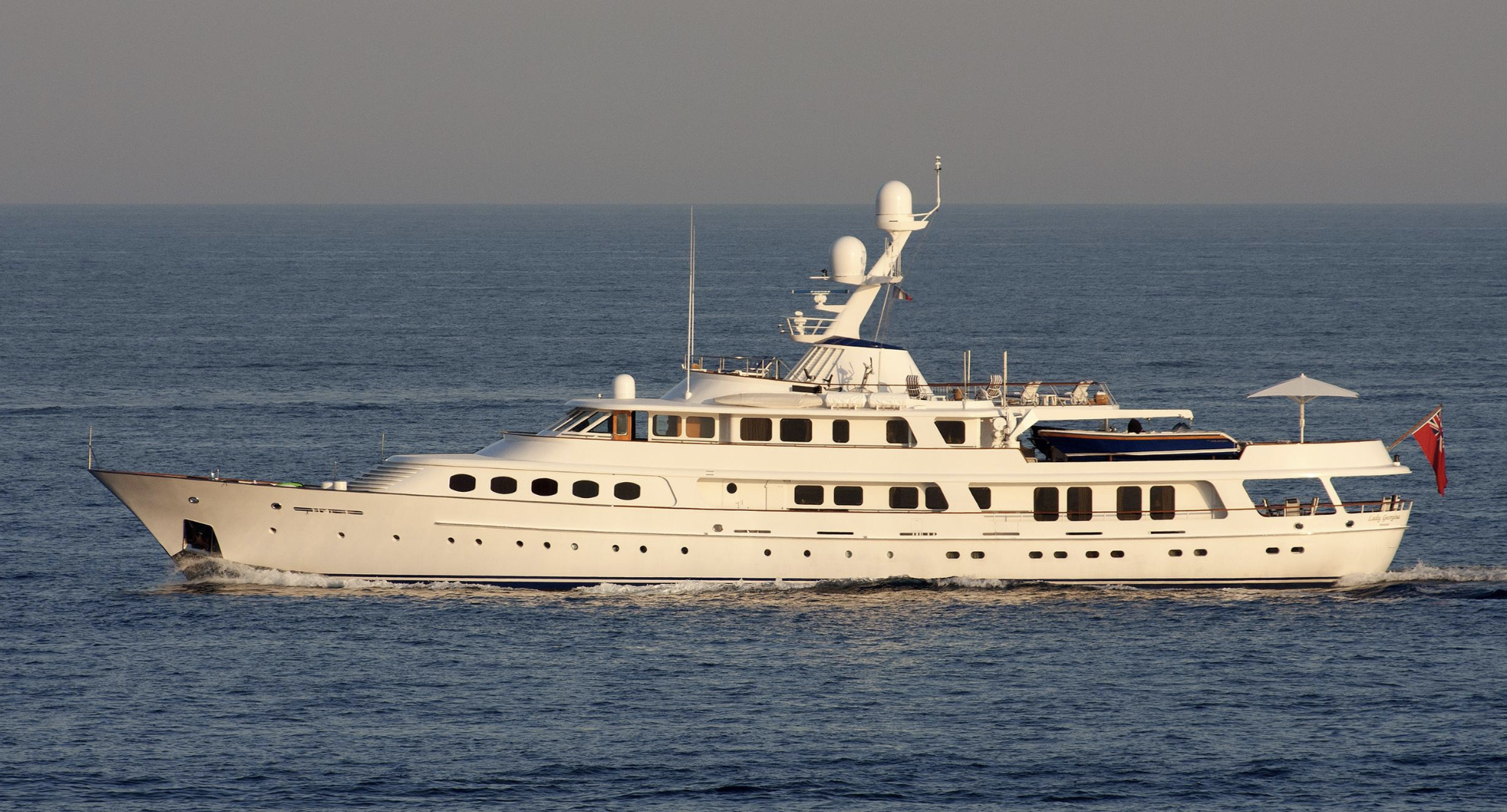
After chugging up and down the Caribbean’s Winward Isles a couple of times, mostly in short hops from port to port, I’d seen many different islands and set foot on fifteen or sixteen. It had been an unforgettable five months. We set off back to Europe from St Thomas, the largest of the American Virgin Islands, in mid-March. Casting off from the dock in Charlotte Amalie, with vast cruise ships fore and aft, we manoeuvred our way through the sizable harbour of sailing boats to the open sea. Our speed was set to a steady fourteen knots. It would take two weeks to reach France.
The gentle, rhythmic climbs and falls of the Atlantic swell were an echo of the crossing the previous November. Our return was beginning with similar calm. Peering over the bow, I could see my reflection in the water most mornings as I scoured the deck for marooned flying fish.
The two standout events of our crossing home to Europe were submitting my notice, a reluctant acknowledgement that it was time to rejoin the real world, and a surreal episode when we were buzzed by two helicopters from the USS Nimitz. America’s largest naval ship, there were nearly six thousand servicemen on board. During a night watch with our boat’s engineer a few days from land, the choppers suddenly thudded overhead at 3am, flicked on their search lights and, with deafening amplification, instructed us to identify ourselves and demanded we change course. We’d seen the large orange blob of a ship on the radar, probably twenty-five miles away and thought nothing of it. Using Channel 16 on the radio, we squeaked out who we were and confirmed a course change. The two helicopters belched off into the night. On the radar, the blob disappeared behind us.
Nearing Africa, we could smell it. Not quite vanilla and spices, but a definite herby quickening to the spring air. The evening that we drew close to the straits of Gibraltar, we listened to increasing radio chatter from the many ships funnelling towards the narrow seaway.
“Warning, warning,” cackled one Australian-accented voice. “Greek ship in the area. You know what they’re like. Give ‘em wide berth if you don’t want a collision.” There followed an explosion of Greek invective from the target of the prank, followed by chiming chunter from others on Channel 16. Gradually the bickering and banter died away, and we focused on getting into line and steaming through. Both Spain and Africa were clearly visible either side in the late evening light. A calm descended, as a halo of faintly pink mist spread across the colourless water around us. The currents slowed to an oily, lugubrious murmur, reluctantly stirred to froth in our wake.
As late afternoon turned to dusk, three separate schools of dolphins swept into view, perhaps thirty to fifty animals each, apparently suspended in the meniscus of low sea fog. They dove and rose in constant rhythm. At different points, they would tussle under our bow, jockeying with each other for pole position before peeling away as a pack to investigate other playgrounds. In a horizon-less world, the ships around us floated, seemingly airborne. As a returning welcome to Europe, our passage into the Med could not have been more enchanting.
As we headed on, the first reports of a significant weather change were coming through.
“Team,” announced the captain cheerfully over supper that night, “Think it’s going to get a bit lumpy as we head up into the Golfe de Lion.”
He meant the expansive arrowhead of water that buries itself into the south coast of France. Relatively shallow, with a wind in the right direction, he explained that not only could the waves be whipped up to reasonable size but that, due to the lack of depth, the fetch between them was often very short. A direct southerly would send the water packing into the apex. With nowhere else to go, the tideless Mediterranean could turn brutally vicious.
“Yep,” he added with crisp, Admiralty-tuned clarity. “We might be in for something of a pummelling.”
* * * * * * * * * * * * * * * * * * * * * * * * * * * * * * * * * * *
I don’t remember much about the next couple of days, save for an increasing tension and a dramatic change in the sea. Rounding the Balearics in the middle of the night was to confront steepening waves, quickening winds and incessant, driving rain. For some reason, in my six months on the boat I was never seasick. But, from the moment we turned north towards France, the most comfortable alternative to being on the bridge was to lie in bed. Or at least, to begin with.
As we neared the Provençal coast over the last Saturday night, the drumming on the hull, the thuds, creaks and crashes of irregular waves and straining metal became a cacophony. From the early hours of the morning, all of us gathered up on the bridge. Little, if anything, was said. From an occasional remark from the captain or the engineer, both of whom had had long naval careers, we understood that this was anything but routine. Despite the closeness we’d shared over six months, working, playing, partying and living together, we all retreated inside ourselves.
As the storm edged up to epic destruction, decisions were taken and extraordinary luck came into play.
We had burned our way through most of our fuel in the near three-thousand-mile trip and were down to the last tank. Cubby, our captain, took the decision to flood the empty ones with seawater. He also instructed the engineer to pump seawater into our nearly empty freshwater tanks. (The idea having been that we’d clean them out when reaching Port Vauban at Antibes.)
The effect was immediate. Our skitters over the sea’s surface like a flat-bottomed bath tug slowed. We sat more solidly in the water. We also put out stern anchors on a limited line, the drag slowing our ‘falls’ as we tipped over the closely packed waves. The stabilisers were also out, comedically small and rounded fins that jutted from our midships, cartoon flippers supposed to steady our incessant port-to-starboard-and-back rolls.
Most critically of all, we lucked into protective custody of two small islands, just off the Côte D’Azur. Tiny lumps of France thrown from the shore in a prehistoric, geological fit, they loomed onto our radar as gifts for petrified mariners. I shall forever be grateful to Île Saint-Honorat and Île Sainte Marguerite, our unwitting saviours. As much by luck as judgement, we lurked on their leeward side for about seven or eight hours, bulwarked against the raging open sea. Eventually, long after dark that Sunday evening, the wind dropped enough for us to be able to sleep in shifts.
With seawater-laden tanks, exhausted, battered and bewildered, we chugged groggily in Port Vauban just after dawn the following morning. For the next week, we scrubbed and repainted the complete exterior above the waterline. Our fuel and water tanks had to be scoured from the inside before they could be refilled. The legs on the grand piano had collapsed, its casing splintered. Carpenters, re-upholsterers and industrial cleaning teams swarmed over the decks and in every nook and crevice. Tony, our engineer, spent hours tending the strained inner workings of the two engines, frazzled after their day at screaming pitch.
My last significant task as a crewmember was to liaise with the local fuel suppliers. My schoolboy French qualified me for the errand. The diesel dealers evidently didn’t trust boats like ours, suspicious that gleaming white super yachts could, all too easily, slip their moorings and escape to international waters. They insisted on cash payment. In faltering sentences, I set up the arrangements over a ship to shore telephone line.
Ripple dissolve to a sunny May morning, and my twenty-two-year-old self as I marched back from the centre of Antibes to the Port, after a long, faltering transaction at a bank. I was carrying the money in two supermarket plastic bags. Neat within were bundles of pristine French Francs. The amounted to 35,000 pounds sterling (equivalent to £131,000 in 2026 according to the RPI). I’d never seen, let alone carried, so much money. We had to wait while the lorry driver, a small, irritable man who had emptied his entire load of diesel into the Katalina’s clean tanks, counted every single note in his cab. It took him an hour before he was satisfied it was the right sum.
This may have read as an over-dramatized account, polished for effect some forty-three years later. As some of the most anxious moments of my life, the events remain horribly vivid. And, perhaps for obvious reasons, I remember our captain, Richard ‘Cubby’ Wolf, a trenchant, impressive and unforgettable force of nature, looking me in the eye in the final days before I left MY Katalina forever.
On a calm spring evening, we stood on the deck and looked across to the marina to the Mediterranean beyond. “I hate rough seas,” he said. “But that was the worst fucking storm ever. We were very lucky.”
A day or two later I stepped ashore for the last time.


Wow! 😮 Beautifully written, felt like I was there…and now rather wish I hadn’t been! 😉
LikeLike