Jim Pepper was a tenor saxophonist. Wikipedia describes him as having been “an internationally recognized and influential jazz musician”. He is best remembered for Witchi-Tai-To, an elaboration of a Comanche peyote chant learned from his grandfather. Ralph Pepper had been a ceremonial leader of the Kaw Tribe in Oklahoma. A plaintive, repetitive tribal call, the tune (if you could call it that) became a pulsing, hypnotic refrain. The first time I heard it played – by another band altogether – I was mesmerised.
I have a distant relation who was also a native American. Oq was a Mohawk princess who married a Dutch emigré. She is one of my several greats-worth of grandmothers. Her husband had sailed to the ‘new territories’ to escape religious persecution. These sketchy facts were, eventually, authenticated by an art historian who visited our home in the late 1980s. Up to that point, we four children had only heard my father’s somewhat changeable accounts of our forefathers and mothers. In our family lore, Oq’s father was a high ranking chief, with the wonderful name of Ichi-Hoza-Squotchka, living somewhere west of Albany, New York. Despite an awful lot of Googling, I struggle to find much more about him in the history books. However, Oq definitely existed. Her dowry to the Dutchman was a large chunk of the state of Virginia. The couple sold the land back to the Mohawks for around £200 and sailed to Bristol, in England, where they bought a comfortable house. The husband, a Mr Fischer, who became a Visger, grandly set himself up as the first American Consul to England. At the time, he was largely ignored. History books state that a different man first took the job. Nevertheless, his bewigged, self-important, transatlantic traveller’s portrait hung in our dining room, dominating the relatively tiny space during my growing-up years. An early work by the artist C.R Leslie, it now hangs in (I think) the Smithsonian. It transpires that Fischer/Visger Esquire wasn’t totally insignificant as a link between the United States and the United Kingdom. He just never made the top slot. My father gifted the painting to the academic researcher who was putting a catalogue of C.R.Leslie’s canvases together as a travelling exhibition and book. For me, Oq was always far more interesting than the man she married.
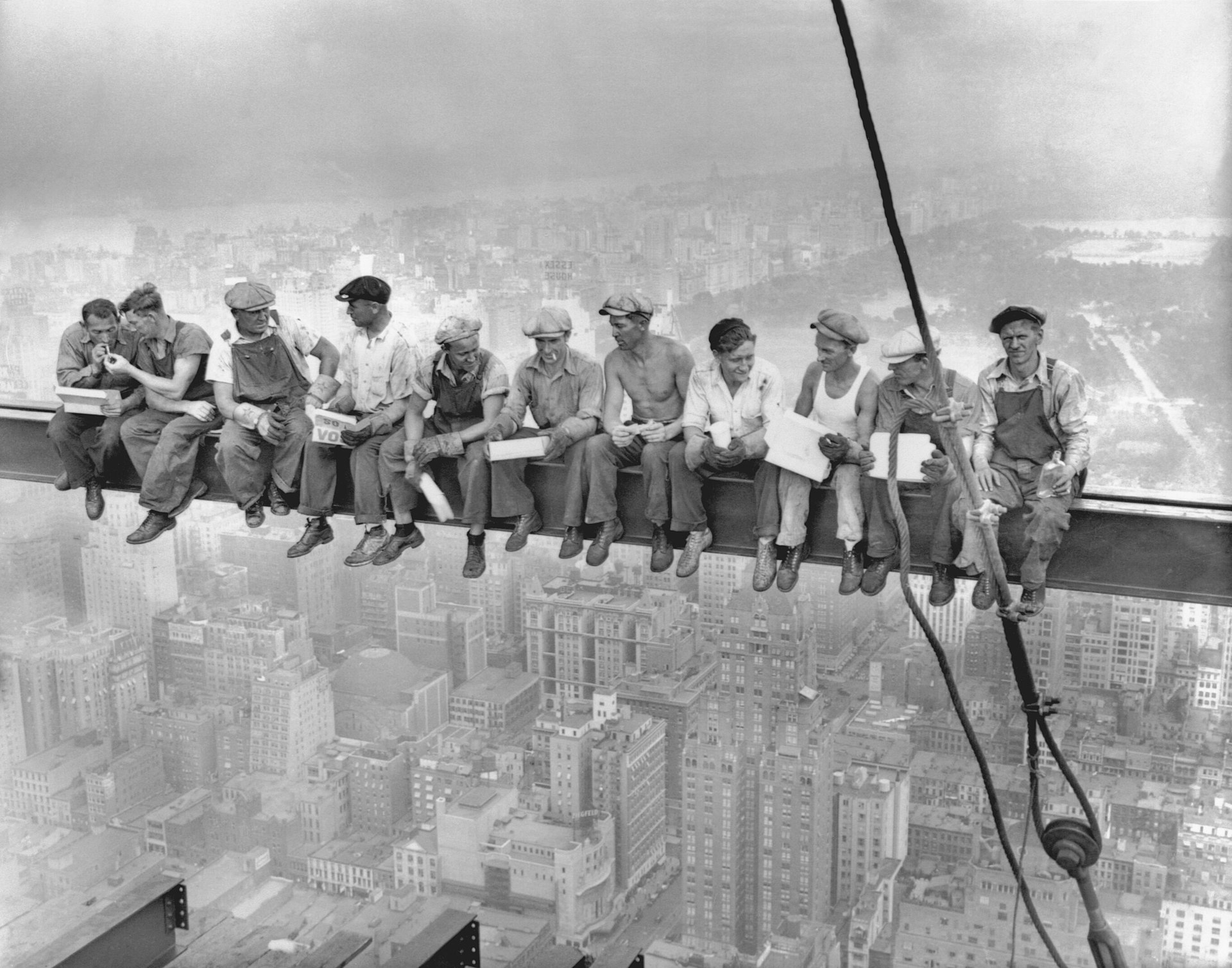
In the Awdry home, my father would dash off versions of the family Mohawk connection in dining table conversations with all and sundry. Visitors listened politely. The usual end point was frequently how, had we hung on to that bit of Western Virginia for three or four centuries instead of flogging it, we’d all be rich as Croesus. His other direction of chat would take us to the declaration that Mohawks are completely unafraid of heights. It is a fact that many of Manhattan’s taller buildings were put up by Mohawk steeplejacks in the 1920s. In the 21st Century, however, a few clicks around the digital atolls of that truth make it rapidly clear that their involvement was simply through proximity and opportunism. Tribesmen came looking for jobs in numbers as the city rose skywards, and called in friends and relations as demand for construction workers ballooned. They came to dominate the labour force through kinship. Mohawk chromosomes do not, apparently, gift one immunity to vertigo. Tiny as the Mohawk part of me must be, fearlessness when marching close to cliff edges isn’t remotely part of my inheritance.
I don’t look or feel native American in any particular way compared to the rest of my genetic ingredients. As a child, I would ruffle up hearth rugs into lumpy mountains and arrange Tempo and Britains (sic) toy cowboys and indians over them in day-long narratives, enacting enormous conflicts. It seemed terribly unfair that the cowboys had shiny (if plastic) rifles and pistols, while the Indians’ bows and arrows were, only occasionally, supplemented by a wonky axe or an unthreatening looking stick. Despite support-the-underdog tendencies, I was scrupulously even-handed as to which side won, scrabbling them up and down the woven Persian carpets of their patterned terrain.
Ripple dissolve about fifteen years and I listened, as a fascinated student, to a Scandinavian quartet assault Witchi-Tai-To on an ECM recording. It was the first time I had encountered Jan Garbarek’s saxophone playing. Palle Danielsson was on bass and the astonishing Jon Christensen painted sound with cymbals. Bobo Stenson’s muscular piano playing provided considerable glue. The trio accompanying him became Keith Jarrett’s bedrock players for a spate of signature albums. Other tracks on the Witchi-Tai-To album include Desireless, a searing, memorable take on a Don Cherry – father of Neneh Cherry – composition. A story grows from that tune that is for another time.
My introduction to Jim Pepper’s chant-made-musical creation was thanks to Phil, the pianist leader of our quartet. At a time of hiatus, when our playing is suspended for an indefinite period, there is much to look back on. Below is a recording of our approach to Witchi-Tai-To. Heavily improvised, it’s a live performance at the 606 Club from some time around 2014. Part penetrating wail, part spiritual call to prayer, it has all the glitches that go with live, unstructured performance by an amateur band. Phil is lyrical (and generous). There are an endless series of bars that riff off one note. Paul’s sax playing carries them with a haunting resonance, in my humble opinion. Graham keeps us in place.
Four minutes and thirty-seven seconds long, it’s a tenuous connection to a little part of my blood and a bigger piece of my life.
Philip Dodd Quartet; Witchi-Tai-To by Jim Pepper, recorded live at the 606, Lots Road Chelsea c. 2014. Philip Dodd: piano. Paul Mason: alto, soprano sax. Graham Brough: double bass. Will Awdry: drums.
 willawdry